Service Animal Policy
The District will allow an individual with a disability to use a service animal in District facilities and on District campuses in compliance with state and federal law. The District will allow an individual with a disability to use a miniature horse as a service animal in District facilities and on District campuses if the miniature horse has been individually trained to do work or perform tasks for the benefit of the individual with a disability and the District has determined that it is readily apparent that an animal is trained to do work or perform tasks for an individual with a disability, based on the assessment factors provided in this procedure, that a reasonable accommodation can be made. The District will allow an individual with a disability to be accompanied by his/her service animal in all areas of the District’s facilities where members of the public, invitees, clients, customers, patrons, or participants in services, programs or activities, as relevant, are allowed to go. These procedures shall also be applicable to an individual who is training a service animal.
Service Animal Defined
A “service animal” for purposes of this procedure means any dog (or miniature horse, as provided herein) that is individually trained to do work or perform tasks for the benefit of an individual with a disability, including a physical, sensory, psychiatric, intellectual, or other mental disability. Other species of animals, whether wild or domestic, trained or untrained, are not service animals for the purposes of this definition. The work or tasks performed by a service animal must be directly related to the handler's disability. The crime deterrent effects of an animal's presence and the provision of emotional support, well-being, comfort, or companionship do not constitute work or tasks for the purposes of this definition.
Exceptions
The District may ask an individual with a disability to remove a service animal from the premises if:
- The animal is out of control and the animal's handler does not take effective action to control it;
- The animal is not housebroken; and/or
- The animal is a threat to the health and safety of others.
If a service animal is excluded under one of these exceptions, the District will give the individual with a disability the opportunity to obtain goods, services, and accommodations or to participate in the service, program, or activity without having the service animal on the premises.
Assessment Factors for Miniature Horses
The District shall consider the following factors:
- The type, size, and weight of the miniature horse and whether the facility can accommodate these features;
- Whether the handler has sufficient control of the miniature horse;
- Whether the miniature horse is housebroken; and
- Whether the miniature horse's presence in a specific facility compromises legitimate safety requirements that are necessary for safe operation.
Control
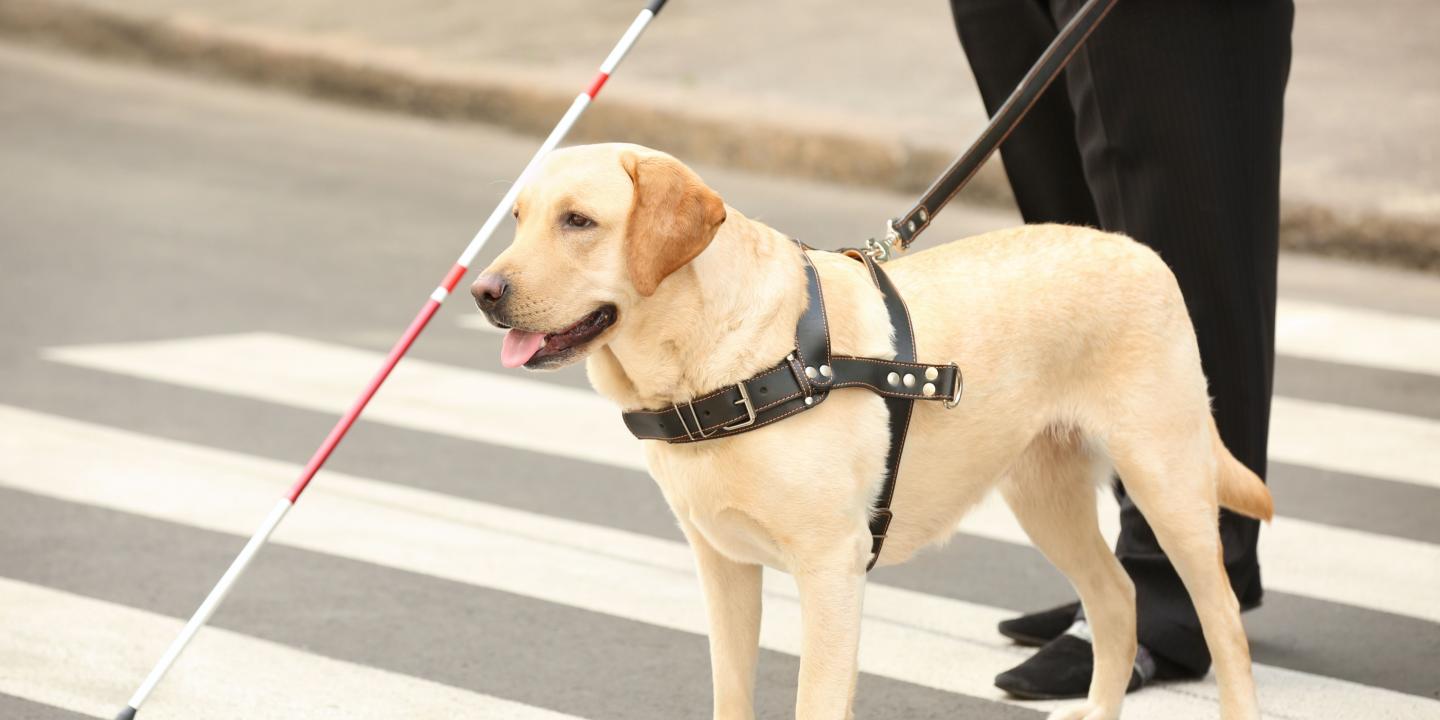
The service animal must have a harness, leash, or other tether, unless either the handler is unable because of a disability to use a harness, leash, or other tether, or the use of a harness, leash, or other tether would interfere with the service animal's safe, effective performance of work or tasks, in which case the service animal must be otherwise under the handler's control (e.g., voice control, signals, or other effective means).
Care or Supervision
The District is not responsible for the care or supervision of the animal.
Inquiries by the District
The District may make two inquiries to determine whether an animal qualifies as a service animal:
- Whether the animal is required because of a disability; and
- What work or task the animal has been trained to perform.
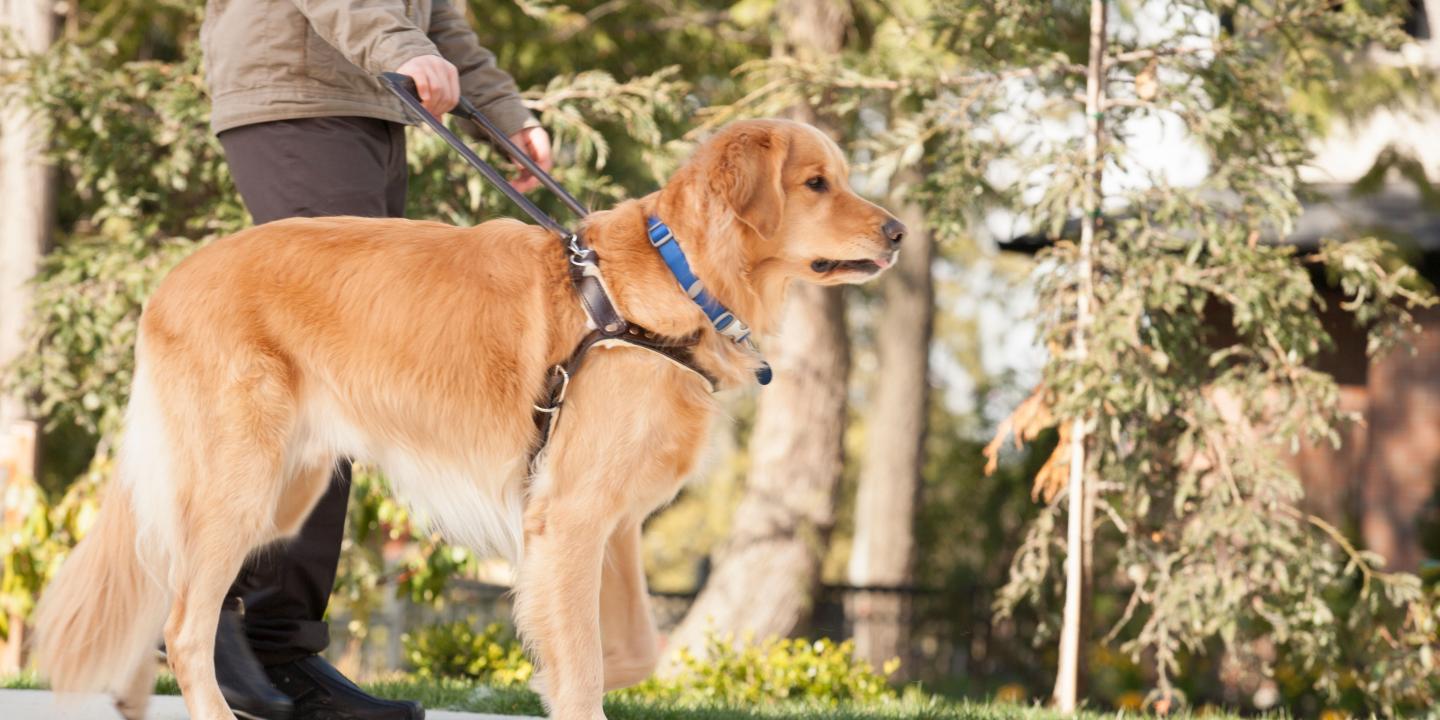
The District will not make either of these inquiries when it is readily apparent that an animal is trained to do work or perform tasks for an individual with a disability (e.g., the dog is observed guiding an individual who is blind or has low vision, pulling a person's wheelchair, or providing assistance with stability or balance to an individual with an observable mobility disability). An individual may choose to produce a county service dog license or identification tag as proof that the animal is a service animal. Licensure or certification is not required in order to meet the definition of service animal under this procedure.
There are no licensing or certification requirements for miniature horses.
A service animal in training is allowed on campus if wearing a harness that clearly identifies it as such.
No Surcharge
The District will not ask or require an individual with a disability to pay a surcharge, even if people accompanied by pets are required to pay fees, or to comply with other requirements generally not applicable to people without pets. If the District normally charges individuals for damage caused by pets, an individual with a disability may be charged for damage caused by his or her service animal.
Emotional Support Animals
The District’s practices regarding animals on campus are governed by Board Policy BP 3440 and its accompanying Service Animal Procedures (Adopted December 17, 2019), in alignment with state and federal law.
Definition and Legal Status of Emotional Support Animals
- An Emotional Support Animal (ESA) is an animal that provides comfort, companionship, emotional support, or a sense of well-being to an individual.
- Under District policy and federal law, ESAs do not meet the definition of a service animal.
- The Americans with Disabilities Act (ADA) recognizes only service animals and does not cover ESAs.
- District policy defines a service animal as: “any dog (or miniature horse, as provided herein) that is individually trained to do work or perform tasks for the benefit of an individual with a disability, including a physical, sensory, psychiatric, intellectual, or other mental disability.”
- The policy explicitly states that the provision of emotional support, well-being, comfort, or companionship does not constitute work or tasks for purposes of the service animal definition.
Access to District Facilities
- Animals whose sole function is to provide emotional support or comfort do not qualify as service animals under District policy or the ADA and therefore are not covered by the same access provisions.
- Because ESAs are not service animals under BP 3440 or the ADA, ESAs do not have public access rights to District facilities or campuses.
- ESAs are not permitted in any areas of campus, including but not limited to:
- Classrooms and instructional spaces
- Student services areas or offices
- Library, or any other indoor campus facilities
Disability Accommodations Process
- Students with disabilities who require academic or access accommodations should contact the Educational Assistance Center to discuss available accommodations.
- Approval of academic accommodations does not automatically grant permission for an ESA to be present in District facilities.
Oxnard College Service Animal Acknowledgement
- The service animal handler (owner) is responsible for keeping the animal under control at all times.
- The service animal cannot pose a threat to others. The handler is fully responsible for any liability related to the actions of the service animal, including damage, bites, scratches, or if the animal runs away.
- The service animal must be housebroken, meaning it is trained to urinate and defecate either outside or in a designated area.
- Handler must maintain proper hygiene of their service animal and promptly collect animal waste (e.g. dog feces), place it in a plastic bag, tie it securely, and dispose of it in an outdoor trash bin.
- The service animal must have a harness, leash, or other tether, unless the handler cannot use one due to a disability or if it interferes with the animal's safe and effective task performance. In such cases, the animal must remain under the handler’s control through voice commands, signals, or other effective means.
- Oxnard College is not responsible for the care or supervision of the animal. Handlers are responsible for cleaning up after their animals, except for extenuating circumstances.
- Oxnard College faculty or staff may request the removal of a service animal from the premises if:
- The animal is out of control, and the animal's handler does not take effective steps to manage it; or
- The animal is not housebroken.
- If a service animal is excluded under one of these rules, Ventura County Community College District will provide the individual with a disability the opportunity to access goods, services, and accommodations or to participate in the service, program, or activity without having the service animal present.
Disclaimer: Handlers (students) should be prepared to answer two questions from faculty, staff, and/or students regarding their service animal:
- Is the service animal required due to a disability? (Handler/Students are not required to disclose the nature of their disability).
- What work or task has the service animal been trained to perform?
Following meeting and registering the service animal with the Oxnard College Educational Assistance Center and signing of this acknowledgement by the Handler (student/owner), the EAC will notify Oxnard College staff and faculty to inform them of the service animal’s presence on campus.